Critical software. For companies that run on compute.
Valen Systems is a technology company that makes critical software for compute-focused companies.
When a slow server holds up production, a failed service interrupts customers, or a restart loses the work, the problem is bigger than a chart. We build for uptime, recovery, security and more useful work from the hardware you already have.
Arcturus by Valen Systems connects machine health, service behavior and operating history so teams can investigate deterioration and decide what needs attention. We focus on the practical chain from a changing condition to the systems it affects, the action to take and the person responsible. The objective is uptime, from a heavily loaded server to the infrastructure around a fleet.
A process coming back online doesn’t mean its state, files or dependent services came back correctly. Rubian and Kestowv bring persistent working state, service controls and recovery mechanisms into the operating environment. Our recovery work connects those mechanisms to a tested sequence, clear stop conditions and a usable handoff.
Kestowv addresses the execution and coordination work beneath the application, where contention and unnecessary operations consume capacity. We evaluate correct output, responsiveness and resource use together, so a faster counter doesn’t hide worse behavior elsewhere. The outcome we pursue is more useful work per machine, not a better-looking utilization graph.
Connected software needs understandable interfaces and control over who can use them. Rubian/Kestowv’s socket-based interfaces give applications a language-independent communication path when they implement the supported protocol. We treat authentication, permissions, encryption and privacy as explicit integration requirements, so connecting software doesn’t mean surrendering control of the system or its data.
Rubian’s persistent user spaces and agent VMOS give people and agents separate identities, files, projects and running work on a shared machine. Think of a mainframe: separate users, shared computing power. Readable commands and inspectable state help the operator stay in control instead of reconstructing context every session.
Valen Systems works on the execution machinery itself through Rubian and Kestowv, where coordination and contention affect what a machine can finish. Datadog’s Continuous Profiler identifies expensive code and IBM Instana/Turbonomic optimizes resource allocation; our work reaches into how computation is organized underneath those decisions. One published full-kernel campaign recorded a median 4,387,675 mixed-subsystem operations per second across three runs, covering 116 modules with zero errors; that workload-specific result isn’t an application-wide speedup or a comparison with those vendors.
We design for what state survives, what restarts, what it depends on and when an operator must intervene. Dynatrace provides programmable response workflows; Rubian/Kestowv also addresses machine-level persistence and service behavior, including health-gated releases and bounded retries. The point is to return to useful operation, not simply clear an alert.
Readable commands, socket interfaces, persistent workspaces and explicit access controls make the system something developers can program, not only observe. Datadog’s network analytics diagnoses traffic behavior such as TCP latency and retransmissions; our developer-facing work concerns how connected software is constructed and controlled. That connects the person writing the integration to the person responsible for running it.
The workload and its physical dependencies belong together
Valen Systems approaches infrastructure from the workload and machine outward, joining execution, recovery and hardware condition to the dependencies that keep work running. Schneider Electric’s EcoStruxure IT covers multi-vendor IT infrastructure, power, cooling and predictive maintenance; we bring the execution and restorability foundation into that wider operating picture. Our full-stack direction connects the analytics to maintenance responsibility, not just another notification.
Co-founder Troy Mallory’s builtin-tracking work was merged through JRuby PR 9174, expanded across runtime fast paths and shipped in JRuby 10.1+. Our product documentation, benchmark records and released open-source tools give technical buyers specific work to examine before an engagement. An upstream contribution is evidence of engineering adoption, not a claim that the upstream project is our customer or endorses Valen Systems.
Published tools provide a self-service entry point; Arcturus Community is the consumer-edition path, including the planned Omarchy packaging.
The team behind Valen Systems
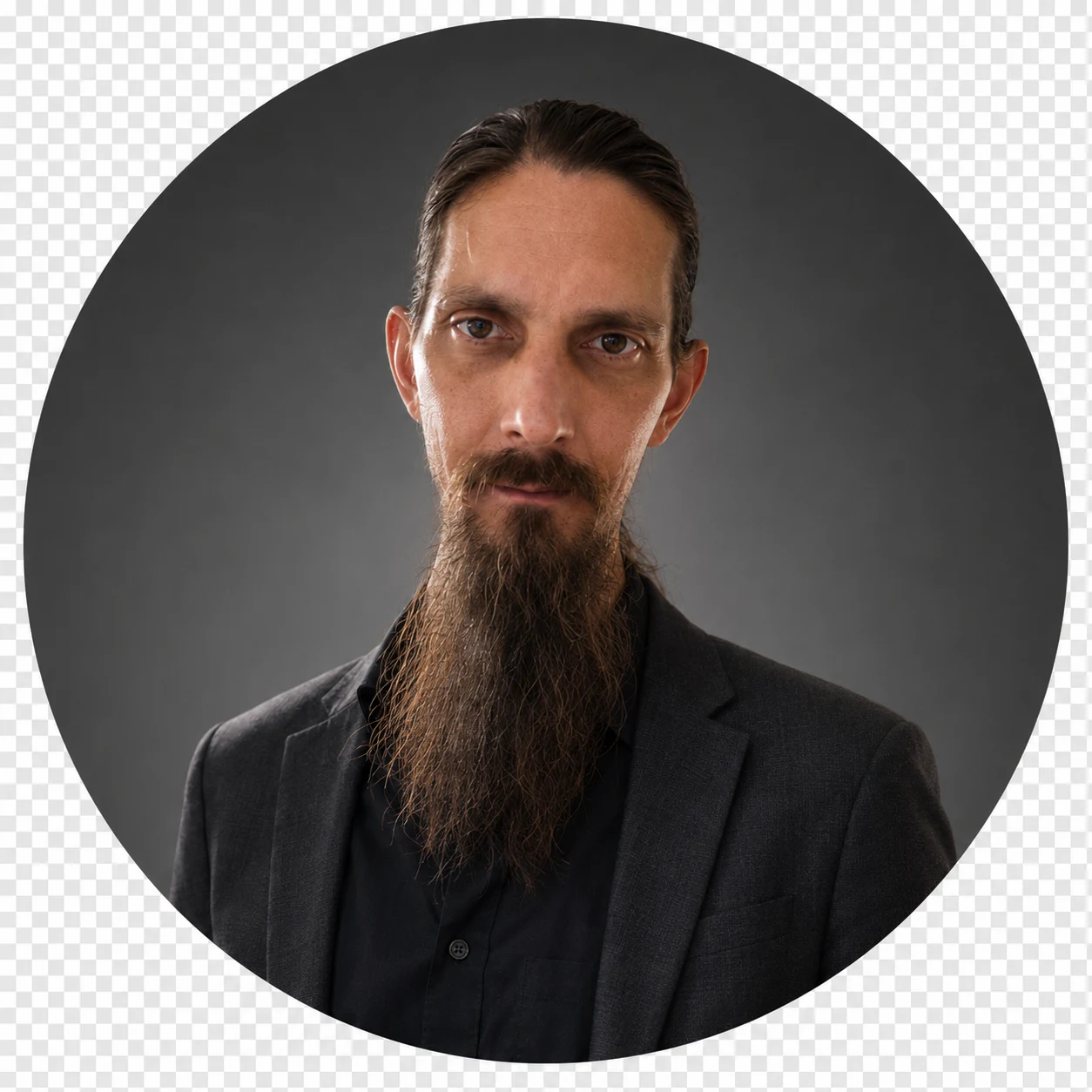
Founder
William Robinson
Before Valen Systems, William founded a family office and worked across industrial projects, finance, logistics and the coordination required to get complicated work done. He leads company strategy, partnerships and commercialization, connecting the technology to a customer problem and a business capable of delivering it.
Troy invented Rubian and Kestowv after years of working on the runtime and operating-system assumptions that make ordinary computation more expensive than it needs to be. He leads the systems engineering behind the company’s technology, with builtin-tracking work shipped upstream in JRuby 10.1+.
William built Core around what people and agents want from a computer; Troy built Rubian and Kestowv around how the machine carries out that work. They teamed up because the interface and the systems beneath it should reinforce each other, not fight over resources or lose the context that makes work useful.
Today, Arcturus carries the reliability and management work forward, while Core has its own home for human- and agent-facing business applications. William leads the company and commercial work; Troy leads the technical foundation, with specialist responsibilities defined for each engagement.
Tell us what runs, what’s slowing down or failing, and what a good result would look like. Use the contact form, email the team or request a conversation; you don’t need to arrive with a finished specification.
We identify the workload, access requirements, constraints, deliverable and acceptance criteria before work begins. The proposal names the project contact, engineering responsibilities, communication channels and any specialist or on-site work.
We establish the current behavior and the evidence that will show whether it improved. Our published fixed-scope technical offers target seven business days after complete inputs and written start confirmation, with a 30-minute review call and one clarification round within 14 days. Larger implementations and ongoing support have their own agreed schedule and response expectations.
The handoff records the findings, changes, recovery steps, remaining limits and who owns the next action. Implementation, ongoing support and maintenance can follow under a separate agreed scope.
William Robinson, Founder; Troy Mallory, Co-founder
Headquarters
Hollywood, California, United States
Website
valen-systems.com for products and engagements; valensystemsinc.com for company information, research and documentation. Both belong to Valen Systems Inc.
Core offering
Critical software for reliability, restorability, security and computing efficiency. Arcturus is the reliability and management product; Rubian and Kestowv form its technical foundation.
Pricing
Published technical reviews, plans and runbooks range from $450 to $950 USD, one time. Software access, implementation and ongoing support are scoped separately. Published open-source tools use their project-specific licenses.
Contract terms
Each engagement defines deliverables, required inputs, acceptance and responsibilities. The terms and individual offer page govern the purchase; a review isn’t an ongoing service contract.
Services
Workload evaluation, reliability baselines, recovery planning, deployment readiness, implementation and maintenance coordination within an agreed scope
Client names are disclosed with permission. The public engineering record includes upstream JRuby adoption, which isn’t a customer or endorsement claim.
Datadog, Dynatrace, IBM Instana/Turbonomic and Schneider Electric EcoStruxure IT cover overlapping parts of performance, automation or infrastructure management. Scope differs by product and engagement.
We make critical software for companies that depend on compute. Our work connects reliability, restorability, security, efficiency and a usable operating environment, with Arcturus as the reliability and management product.
Do we have to run a data center to work with you?
No. A software company with overloaded servers, an industrial application that must stay online or an AI service coordinating concurrent work can have the same underlying operating problems. Start with the system that needs improvement, even if it’s one machine.
Is Arcturus just a monitoring dashboard?
No. Monitoring is one input; the work also covers operating state, service behavior, dependencies, recovery and the controls used to act. A proposed engagement identifies the actual systems and integrations involved.
Can applications in other languages communicate with the software?
Yes, through socket-based interfaces when the application implements the supported protocol. The integration needs to follow the interface’s command, response, authentication and deployment requirements; talk to us about your application.
What’s available for personal systems or as open source?
The tools catalog lists published projects, licenses and operating-system support. Arcturus Community is the planned consumer edition, including the Omarchy packaging direction.
What happens after we contact you?
We review the problem and discuss a suitable scope, required inputs, ownership and next steps. You’ll agree timing, communication and response expectations with the team before work begins.
Are the two Valen Systems websites the same company?
Yes. Valen-systems.com is the product and engagement site; valensystemsinc.com contains the company information, research and documentation. Both belong to Valen Systems Inc.; Valen is the AI, not the company name.