Removing a server can leave an opening in a rack that remains in service. Before closing the work record, check how the space fits into the intended airflow arrangement. Small installation details can create paths that connect the supply and return sides.
Draw the two paths separately
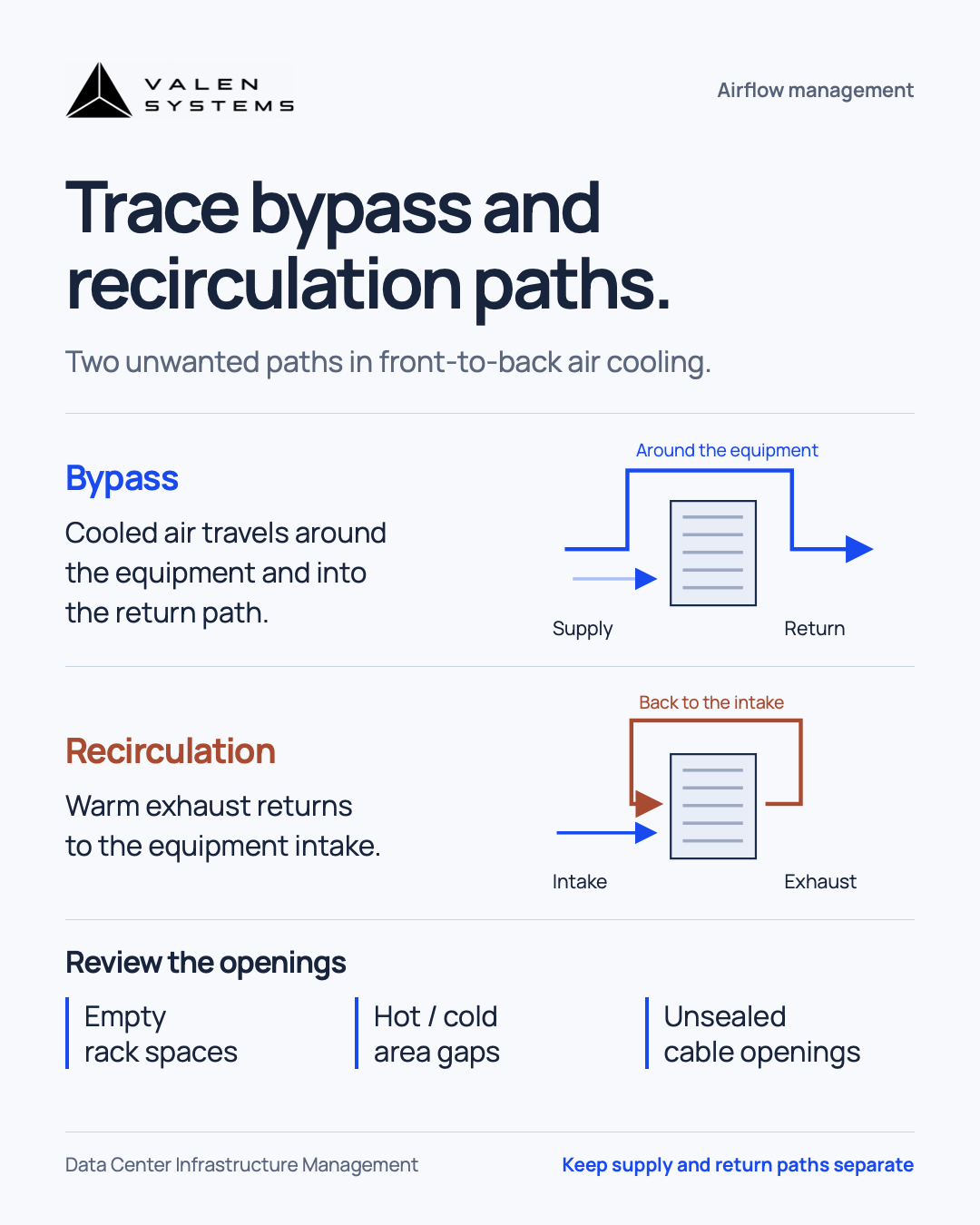
ASHRAE’s Data Centers and Telecommunication Facilities chapter describes two forms of air mixing. In bypass, cooled supply air reaches the return path without passing through the intended computing equipment. In recirculation, warm equipment exhaust reaches an intake again, increasing the air temperature entering the equipment.
Start a review sketch with the intended route through the installed equipment. Then mark the suspected bypass route and recirculation route separately. An arrow should identify a specific opening or passage being investigated. If the direction is only a hypothesis, label it as such.
The diagram accompanying this article represents front-to-back air-cooled equipment. Confirm the actual airflow arrangement before applying it to a rack. Equipment with other intake and exhaust orientations needs to be considered in the site’s design.
Use an equipment change to focus the inspection
Consider a hypothetical rack where a server has been removed and the remaining equipment continues to run. The change record identifies the vacant rack positions. During the closeout inspection, the operator notices that the opening connects the front and rear spaces.
Record that observation against the removal work. Include the rack and position, a photograph where permitted, the date and the person who will review the airflow consequence. Describe the opening as observed. The next review establishes whether the current arrangement matches the approved rack design and what correction is appropriate.
This example provides a starting point for finding a change that operations can trace. The same method can be used after a cable move or maintenance activity: identify the changed physical detail, locate its design record and assign the unresolved review.
Check the openings that connect the air paths
ENERGY STAR’s airflow guidance identifies unused rack spaces, cable congestion and leakage around cable openings as relevant inspection areas. It describes blanking panels for unused rack positions, structured cabling to keep airflow paths clear, and appropriate seals around plenum cable penetrations.
Use those categories to organize a site-specific observation list:
- Vacant rack positions: locate spaces left by removed or relocated equipment and compare their treatment with the approved rack arrangement.
- Gaps between hot and cold areas: record the exact boundary and opening so the responsible reviewer can find it. Include the operating state of doors or panels during the observation.
- Cable openings and congestion: identify the penetration or blocked area, the associated connection records and the team responsible for reviewing a correction.
Keep the observation separate from the proposed work. A photograph of an opening can establish its location; selecting a panel, seal or cabling change requires the installed equipment and site requirements. Route that proposal through the people who own the affected systems.
Connect the inspection to the thermal observations
Bring the relevant inlet-temperature records into the review, retaining their equipment locations and observation times. Describe the workload and cooling configuration associated with the readings. If the suspected path is near the top of the rack, the reviewer needs to know which records describe that part of the installation.
Write a specific question for the investigation. One useful example is whether an identified opening contributes to the observed inlet conditions in the adjacent equipment. The facilities team can decide what observations or analysis will answer it. Keep uncertainty visible when the available records do not establish the airflow direction or its contribution.
A visual inspection is useful for documenting the installation. Follow-up measurements help the team assess the result of an approved correction. Preserve the inspection record and the later measurements together, with enough context to explain any differences in operating conditions.
Close the finding with a checked result
Before the approved work begins, agree on the physical closeout check and the observations the reviewer will use afterward. Record the actual correction, the equipment affected and the time of the change. Repeat the relevant observations under the agreed conditions, then have the designated reviewer document the outcome.
An unresolved result should remain an assigned item. It may require a wider review of the air-delivery arrangement, another observation period or correction of incomplete equipment records. The action register should explain what happens next and who owns it.
Valen Systems’ operating notes connect physical conditions to the records used in equipment decisions. Bring a documented airflow question and the measurements currently available when discussing your data center’s monitoring requirements with our team.
Sources
- ASHRAE Handbook — Data Centers and Telecommunication FacilitiesPublication date not stated. Retrieved October 17, 2026.
- ENERGY STAR — Manage Airflow for Cooling EfficiencyPublication date not stated. Retrieved October 17, 2026.